Bedding · Materials & Care
How to Evaluate Linen Bedding for Year-Round Comfort
Linen has a way of making a bedroom feel at once relaxed and considered: a little texture, an easy drape, and a promise of comfort that is not limited to one season. But the right set is more than a pleasing surface. Fiber origin, fabric weight, construction, mattress fit, and care instructions all influence how linen bedding performs night after night.
Published October 30, 2026
Shopping for linen sheets can feel deceptively simple. The word “linen” names a fiber, but it does not tell you everything about the cloth: how substantial it will feel, how it was woven, whether it has been softened, or how it will respond to your particular bedroom and laundry routine. Two sets can both be made from flax and still feel quite different in use.
A thoughtful linen sheet buying guide starts with a more useful question than “Is it soft?” Ask instead: Does the fabric suit my climate and sleep habits? Will the fitted sheet accommodate my mattress? Are the set contents and care instructions practical for my household? These details are especially important when a material is expected to work across changing temperatures and repeated washing.
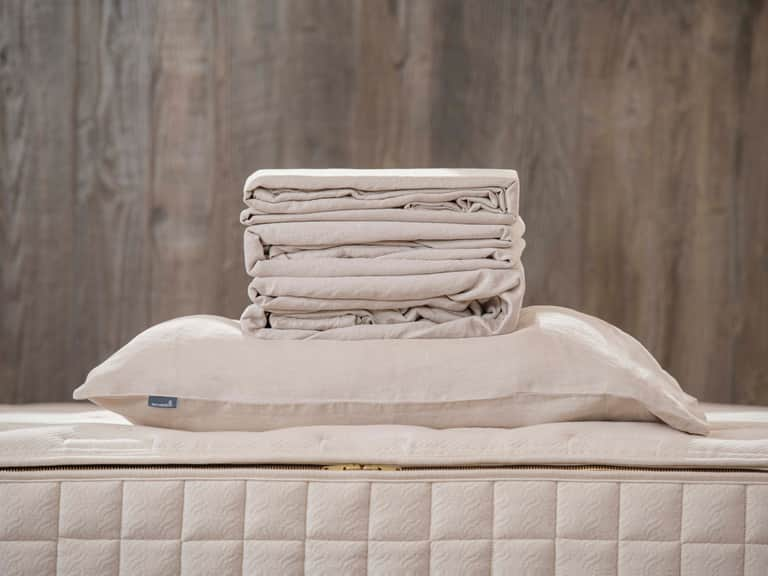
Naturepedic Organic Linen Sheets offer a helpful example of how to read product specifications. The set is described as 185 grams per square meter (gsm), made with GOTS-certified organic flax linen grown in France and produced in a GOTS-certified facility in India. It includes a flat sheet, fitted sheet, and two pillowcases, with a 15-inch pocket on the fitted sheet. Each of those details answers a different question about provenance, weight, use, or fit.
Begin with the fiber: linen starts with flax
Linen is made from the fibers of the flax plant. Those fibers give the fabric its characteristic dry, textured hand and its distinctive way of softening with use. Unlike a polished, uniform surface, linen often shows subtle irregularities in yarn and weave. These are part of its visual character, not necessarily signs of a flaw.
When evaluating bedding materials, look for clear information about fiber content. “Linen” on its own may not explain whether a product is pure linen or a blend. A listing that states 100% linen or specifies organic flax provides a more precise starting point. If the fabric is blended, the other fibers matter too: they may change the hand, drape, care requirements, or durability.
Origin details can add useful context, but should be read carefully. Naturepedic identifies the flax as grown in France and says the linen is made in India in a GOTS-certified organic facility. This describes two parts of the supply chain, not a guarantee that every stage takes place in one country. Clear, specific provenance helps readers understand what is being claimed without relying on vague phrases such as “European linen.”
Certification is another detail worth checking. GOTS, or the Global Organic Textile Standard, is a certification framework for organic textiles that includes criteria across processing and production. A certification can support a more informed choice, but it does not tell you whether the sheet will feel crisp, relaxed, heavy, or light. Those qualities still depend on the fabric and its finishing.
Read fabric weight as a clue, not a verdict
Fabric weight, commonly listed in gsm, describes the mass of a square meter of cloth. It can help you compare linen bedding, particularly when the weight is stated consistently. Naturepedic’s 185 gsm specification offers a concrete reference point: it signals a fabric with some substance, while remaining only one part of the comfort equation.
Weight does not translate directly into softness or quality. A heavier cloth may feel more substantial and drape with a generous presence; a lighter one may feel airier in the hand. Yet fiber quality, yarn preparation, weave, finishing, and personal preference all affect the experience. A numerical specification cannot describe the whole sensation of lying beneath the fabric.
Consider how you sleep. If you tend to feel warm, you may prefer bedding that feels breathable and does not trap a heavy, close sensation around the body. If you enjoy a reassuringly substantial cover, a more weighty hand might feel inviting. The best choice is not the one with the most impressive number, but the one whose feel makes sense for your bedroom and comfort preferences.
Weight also matters in relation to laundering and drying. Denser or larger pieces take up more room in a washing machine and may need more time to dry. Before buying, think about the capacity of your washer and dryer, whether you can line-dry, and how often you expect to wash the bedding. Practicality is part of year-round comfort: sheets that are difficult to care for may be less satisfying in everyday use.
Understand linen’s seasonal appeal
Linen is often chosen for its open, breathable character and its ability to manage moisture. Flax fibers and the construction of the cloth can allow air to circulate, while the fabric’s hand often feels less slick and close against the skin than some smooth cotton finishes. For many sleepers, that combination makes linen appealing during warmer months.
Its usefulness need not end when the evenings turn cool. Linen can feel substantial enough to provide a comfortable layer, and it works well as part of a bedding system: sheets beneath a duvet, with a blanket added or removed as the room temperature changes. A duvet cover is not a substitute for the insert inside it, so warmth depends on the complete ensemble—not on the cover fabric alone.
Claims about temperature regulation should be understood as tendencies, not promises. A person’s comfort is shaped by room temperature, humidity, mattress and duvet materials, sleepwear, and individual physiology. Linen may feel pleasantly breathable to one sleeper and too textured or weighty to another. If you share a bed, differing preferences may matter as much as the climate outside.
For a more adaptable setup, use layers that can be changed independently. A linen sheet set can serve as the foundation, while a duvet insert, cover, or throw adds warmth when needed. The Naturepedic Organic Linen Sheets set includes a flat sheet, fitted sheet, and two pillowcases, allowing it to form a complete sheet layer beneath other bedding.
Weave and finish shape the hand
When comparing linen with cotton, it helps to distinguish fiber from weave. Linen names the flax fiber; percale and sateen describe cotton constructions. A cotton percale sheet is commonly associated with a crisp, matte, cool-to-the-touch feel, while cotton sateen tends to have a smoother, silkier surface. These are broad descriptions rather than guarantees, since yarn and finishing also influence the result.
Linen usually has a more visibly textured surface and a relaxed drape. Some linen is stone-washed or garment-dyed to soften the hand and create a lived-in appearance before the first night. Other finishes may preserve a firmer or more natural feel. Product descriptions that explain the finish give a better sense of what to expect than a simple statement of fiber content.
Naturepedic describes its linen as stone-washed and notes that it softens with washing. That makes the fabric’s evolution part of the buying decision: the first impression may not be the final one. Linen’s characteristic creasing is also worth considering. If a perfectly smooth bed is essential to you, linen’s relaxed look may require a change in expectations—or a different material.
Thread count is not a reliable shortcut for comparing linen with cotton. Thread count measures threads within a defined area and is most often used in descriptions of woven cotton bedding. Linen yarns and constructions differ, so comparing a linen product to a high-thread-count cotton sheet using that number alone can mislead. Give more attention to fiber, weight, construction, finish, and clear care guidance.
Check the fit before you fall for the fabric
A beautiful sheet that slips off the mattress is not comfortable bedding. For fitted sheets, compare the pocket depth with the full mattress height, including any topper or pad that will remain on the bed. Naturepedic lists a 15-inch pocket for its fitted sheet. That figure is useful, but shoppers should still measure their own mattress and check the product’s sizing guidance before ordering.
Mattress dimensions can vary, and a topper adds height that may not be obvious from the mattress label. Measure from the bottom edge to the top of the mattress assembly, then consider whether the sheet’s elastic and cut are designed to accommodate that depth. A close fit helps the sheet stay in place; too little depth can pull at the corners, while excess fabric may feel loose.
Confirm the available bed sizes and what each set includes. Naturepedic’s linen sheet set is listed in Queen, King, and California King. It includes a flat sheet, fitted sheet, and two pillowcases; the stated pocket depth is 15 inches. Pillowcase dimensions vary by size, so check those as well if you use specialty pillows or prefer a particular amount of room.
Do not assume that a duvet cover set contains sheets. The Naturepedic Organic Linen Duvet Cover Sets, for example, include a duvet cover and two pillow shams, with corner ties to help secure an insert. The listed cover dimensions differ between Full/Queen and King/California King sizes. Reading the contents and dimensions avoids an elegant but inconvenient surprise when the parcel arrives.
Care is part of the comfort calculation
Everyday care influences how linen looks and feels over time. Follow the label or manufacturer’s instructions for the particular product rather than assuming that all linen can be treated alike. Fiber, dye, finish, and construction may affect recommended water temperature and drying method.
For Naturepedic Organic Linen Sheets, the listed instructions are to machine wash warm, tumble dry low, warm iron if desired, and avoid bleach. This is straightforward guidance, but it should not be generalized to every linen set. Other linen products may recommend a cold, gentle wash or prefer line drying. Use the instructions supplied for the item you own.
In general, avoid overcrowding the washer. Bedding needs enough space and water to move through the cycle and rinse thoroughly. Use an appropriate amount of detergent; excess product can be difficult to rinse away and may leave residue. High heat and over-drying can put unnecessary stress on fibers, so use the temperature and drying settings recommended for the fabric.
Wrinkles are an ordinary feature of linen, not a care failure. If you prefer a smoother finish, remove sheets promptly and iron them while slightly damp when the instructions permit. If you enjoy the relaxed, softly rumpled look, line drying or low-temperature tumble drying may be enough. A product’s care routine should fit your tolerance for upkeep as well as your laundry equipment.
Wash bedding regularly according to household needs, and separate items where color or construction makes that sensible. A dedicated wash bag is more relevant to delicate pieces that may snag; for large sheets, the more important routine is to avoid overloading and to dry them thoroughly without excessive heat. Thoughtful care can help preserve both the fabric and the calm, clean feel of the bed.
A practical comparison: linen or percale?
The decision between linen and cotton percale is less about which fabric is universally better and more about the texture you want against your skin. Linen offers a characteristic slubbed surface, relaxed drape, and gradual softening. Percale is known for a crisp, matte hand and a more tailored appearance. Both can be breathable choices, but the experience differs.
If you like a bed that looks casually composed, with visible texture and soft folds, linen may feel at home in your room. If you prefer a smoother, crisp surface and clean lines, percale may be more appealing. The Refined Organic Percale Flat Sheet is described as organic cotton with a percale weave and a seven-inch hem. It is a single flat sheet, not a full set, so compare like with like when weighing price and contents.
Seasonality alone should not determine the choice. Room conditions and personal comfort are more important than a simple rule that one fabric belongs to summer and another to winter. Linen can be layered in cold weather; percale can be used year-round. If you are uncertain, consider which tactile quality you notice most while falling asleep: a crisp, smooth surface or a softly textured one.
There is also the question of appearance. Linen’s gentle creasing can lend a bedroom a more informal mood, while percale’s crispness often reads as neat and structured. Neither is inherently more luxurious. The distinction is one of taste, care expectations, and how the bedding fits the atmosphere you want to create.
A checklist for choosing linen bedding
Before settling on a set, use the product description as a reference sheet rather than a collection of adjectives. These questions can make the comparison more precise:
- What is the fiber? Look for a clear statement of linen or flax content and note whether the fabric is blended.
- Where does the fiber come from? Separate the stated growing origin from the place where the fabric is woven, finished, or sewn.
- Is certification specified? Check which standard is named and what part of the product or production it applies to.
- Is the weight listed? Use gsm as a comparison point, not as a stand-alone measure of softness or quality.
- How is the fabric finished? Stone-washing, garment dyeing, or other treatments can influence the initial hand and appearance.
- Will it fit? Measure the mattress with any topper in place and compare that height with the fitted-sheet pocket depth.
- What is in the set? Confirm whether you are buying sheets, a duvet cover, pillow shams, or some combination.
- Can you follow the care instructions? Consider washing temperature, drying method, ironing preferences, and machine capacity.
This approach makes it easier to compare products without overvaluing a single specification. It also helps distinguish between claims about material and details that affect everyday use. A carefully described product is easier to evaluate, but the final measure remains personal comfort.
The final measure is how you sleep
Linen bedding earns its place through a combination of feel, function, and longevity. Its texture is distinctive; its appearance grows more relaxed with use; and its capacity to serve as a layer through changing seasons makes it a compelling choice for many bedrooms. Yet no fiber can guarantee a perfect night for every sleeper.
Use the product details to make an informed decision, then give your preferences equal weight. A listed 185 gsm fabric, organic certification, French-grown flax, a 15-inch fitted-sheet pocket, and clear washing instructions provide meaningful information about Naturepedic’s organic linen sheets. None can tell you, as precisely as your own experience, whether the texture and weight feel right.
Choose linen if you welcome a naturally textured surface, appreciate its softening over time, and are comfortable with its easy, creased character. Choose another material if you want a consistently smooth finish or a sharper, more pressed look. Above all, build a bedding system that can be adjusted: a breathable sheet layer, a duvet suited to the room, and a spare blanket for cooler nights.
Year-round comfort is not a single fabric’s achievement. It is the considered balance of material, fit, care, climate, and personal habit. Once those details are clear, linen becomes less of an aesthetic promise and more of a practical pleasure—one that can feel at ease in the bedroom in every season.